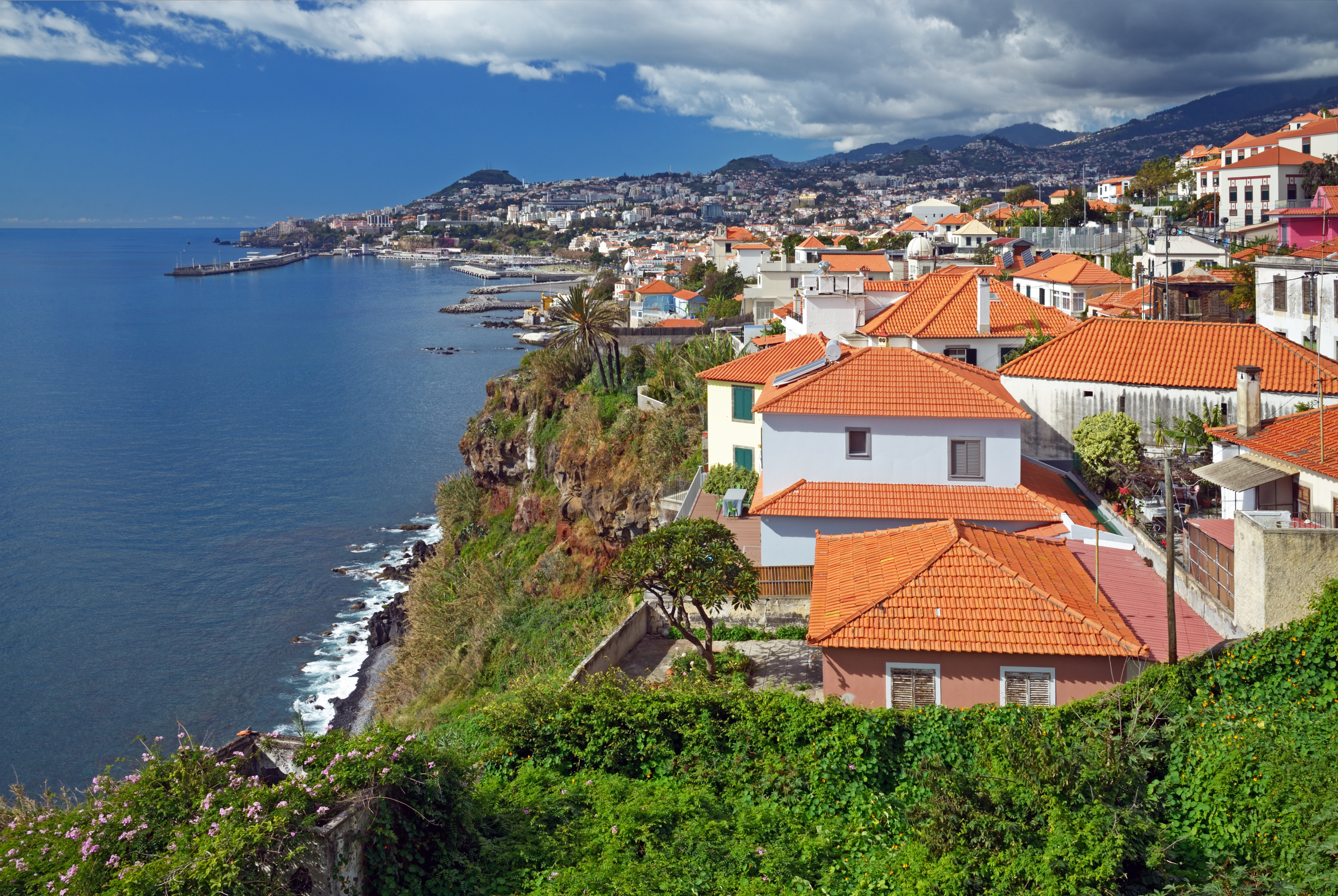
Arriving in Madeira is the beginning of a new routine. Alongside finding a home, discovering your neighbourhood and getting to know local services, you will encounter moments when a few well-chosen Portuguese expressions make a difference. You do not need perfect grammar to begin communicating, but you do benefit from language that is accurate, courteous and suited to the situation.
This guide focuses on European Portuguese as used in Portugal, including Madeira. Regional accents and vocabulary may vary, but the expressions below are widely understandable and useful to newcomers.
When you are unsure how to address someone, begin politely. Bom dia (“Good morning”), boa tarde (“Good afternoon”), por favor (“please”) and obrigado/obrigada (“thank you”) will serve you well.
1. Saying hello and introducing yourself
The first days often involve meeting neighbours, reception staff or local business owners. Short, natural introductions are more useful than memorised speeches.
Good morning. My name is Alex. I have just arrived in Madeira.
Nice to meet you. I am still learning Portuguese.
Excuse me, could you speak more slowly, please?
Chamo-me is a natural way to introduce your name. Notice also estou a aprender, the standard European Portuguese construction for an action in progress (“I am learning”).
2. Understanding and being understood
It is perfectly reasonable to ask someone to repeat information. A courteous request usually makes an exchange easier for both people.
I didn’t understand. Could you repeat that, please?
How is it spelt?
Could you send me the information by email?
Perceber frequently means “to understand” in everyday Portuguese. In an email or appointment setting, asking for written information is often a practical way to avoid misunderstandings.
3. Talking to a property manager or contractor
Whether you are renting, buying or managing a property, knowing how to describe a problem calmly is invaluable. Be specific about the issue and ask about next steps.
There is a water leak in the kitchen.
The air conditioning is not working.
When can the technician come?
Could you send me a written quotation?
In Portugal, orçamento commonly means a quotation or estimate for work. The expression não está a funcionar is a particularly versatile way to say that something is not working.
4. Communicating with your child’s school
For families relocating to Madeira, communication with teachers and school staff quickly becomes part of everyday life. These expressions can help you arrange a conversation or ask about your child’s progress.
I would like to arrange a meeting with the teacher.
How is my son settling into school?
Could you explain the homework to me?
For a daughter, replace meu filho with minha filha. Gostaria de is a polite, appropriate way to introduce a request in formal or semi-formal circumstances.
5. Booking an appointment
Appointments with healthcare providers, service professionals and public offices often require a little practical Portuguese. You can begin with three questions.
I’d like to book an appointment, please.
Do you have availability next week?
Which documents should I bring?
Queria, although grammatically an imperfect past form of querer, is commonly used as a courteous request in European Portuguese. In this context, it does not necessarily refer to a past desire.
6. Shopping, cafés and everyday transactions
Brief exchanges at a local shop, market or café are excellent opportunities to practise. Madeira has a rich food culture, but these phrases are useful throughout Portugal.
I’d like a coffee and a water, please.
How much does it cost?
Can I pay by card?
Do you have a gluten-free option?
For allergies or dietary restrictions, it is important to be explicit rather than relying on a vague request. For example: Tenho alergia a frutos secos (“I have a nut allergy”). Where health is concerned, confirm that the person has understood.
7. Getting around the island
As you explore beyond your immediate neighbourhood, asking for directions becomes useful even if you primarily travel by car.
Where is the bus stop?
Is it far from here?
How can I get to central Funchal?
In European Portuguese, autocarro means “bus”. You may encounter differences in pronunciation across Portugal, including in Madeira, so do not be discouraged if familiar words sound different at first.
8. Knowing when to be formal
One of the most important cultural distinctions for newcomers is how to address another person. Portuguese offers different ways of signalling familiarity, respect and social distance.
With friends or people who have invited informal conversation, tu may be appropriate. In a professional or unfamiliar setting, a request such as Pode ajudar-me, por favor? (“Could you help me, please?”) is often a safe option because it avoids choosing an explicit pronoun.
Unlike English you, the Portuguese word você is not automatically the most polite choice in every situation. Its reception depends on context, relationship and regional convention. When in doubt, use a courteous verb form and the person’s title or name when appropriate.
A practical first-month learning plan
Instead of trying to master every verb tense at once, build your confidence around situations you are likely to face:
- Week 1: greetings, introductions, numbers and polite requests.
- Week 2: cafés, shopping, directions and local services.
- Week 3: household matters, appointments and school communication.
- Week 4: longer conversations, understanding replies and asking follow-up questions.
Keep a small record of expressions you actually use. Revisit them, practise their pronunciation and vary one detail at a time. The aim is not to sound perfect from the outset, but to become increasingly independent in real interactions.

Mara Gomes
Mara Gomes is a professionally qualified European Portuguese teacher and trainer with Bachelor's and Master's degrees in Teaching and five years of experience in an international-school environment in the Algarve. She offers live online private tuition and small-group programmes for international adults, professionals and families, including practical communication, cultural integration and CIPLE A2 preparation.
You can begin learning before your move to Madeira and continue online once you arrive.
Educational guidance only. Administrative, medical or legal matters should be confirmed with the appropriate local professionals or authorities.